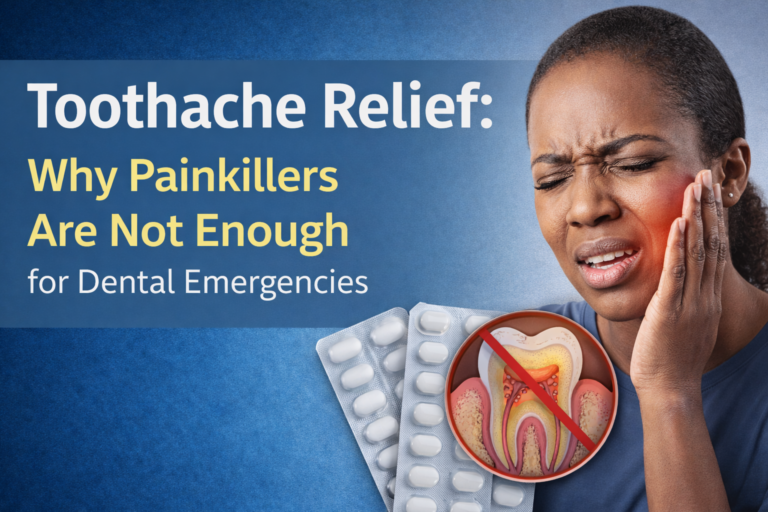
Dental emergencies rarely send a calendar invite. They show up unannounced… sharp pain, sudden swelling, or even a broken tooth right before an important event.
Knowing what to do in those first few minutes can make the difference between saving a tooth and losing it.
Let’s walk through the most common dental emergencies and how to handle them calmly and correctly.
What Is a Dental Emergency?
A dental emergency is any oral problem that requires immediate attention to:
- Stop severe pain
- Control bleeding
- Save a tooth
- Prevent infection from spreading
If it feels urgent, it usually is.
Common Dental Emergencies and What to Do
Severe Toothache
That deep, throbbing pain that refuses to mind its business.
What to do:
- Take a mild pain reliever
- Avoid very hot or cold foods
- Visit a dentist immediately to identify and treat the cause
Important: Do not ignore it. Toothaches often signal infection or decay.
Knocked-Out Tooth
This is one of the most time-sensitive emergencies.
What to do immediately:
- Pick the tooth by the crown (not the root)
- Rinse gently with clean water (do not scrub)
- Try to place it back into the socket if possible
- If not, store it in milk or saliva
- Get to a dentist within 30 to 60 minutes
Time is everything here.
Broken or Chipped Tooth
Whether from a fall or biting something hard.
What to do:
- Rinse your mouth with warm water
- Save any broken pieces
- Apply a cold compress to reduce swelling
- Avoid chewing on that side
- Visit your dentist
Even small chips can worsen if ignored.
Swelling or Abscess
This may appear as a painful lump on the gum and may come with fever or a bad taste.
What to do:
- Rinse with warm salt water
- Do not attempt to burst it
- Seek urgent dental care immediately
This is serious. Infection can spread quickly if left untreated.
Lost Filling or Crown
Suddenly your tooth feels exposed and sensitive.
What to do:
- Keep the crown if you find it
- Avoid chewing on that side
- Use temporary dental cement if available
- See your dentist as soon as possible
Bleeding Gums After Injury
Not the regular brushing type. This is active bleeding after trauma.
What to do:
- Apply gentle pressure with clean gauze
- Use a cold compress
- If bleeding does not stop within 10 to 15 minutes, seek help immediately
Something Stuck Between Teeth
Painful and uncomfortable.
What to do:
- Try flossing gently
- Do not use sharp objects like pins or needles
- If it does not come out, visit a dentist
When Should You Act Immediately?
Do not delay if you experience:
- Severe, persistent pain
- Swelling of the face or jaw
- Difficulty swallowing or breathing
- Uncontrolled bleeding
These are urgent signs that need immediate attention.
Why Quick Action Matters
Dental emergencies do not simply settle down.
Delays can lead to:
- More complex and expensive treatments
- Spread of infection
- Permanent damage or tooth loss
Acting early protects both your health and your finances.
Prevention Still Wins
While emergencies can happen, many are preventable:
- Regular dental check-ups
- Proper brushing and flossing
- Avoiding hard foods and harmful habits
- Wearing mouthguards during sports
Preventive care remains the smartest investment in your oral health.
Final Word
In a dental emergency, panic is your enemy. Knowledge is your advantage.
Stay calm. Act fast. Get help.
Your smile will thank you for it.
Need Urgent Dental Care?
At Smilesdotcom Dental Clinic, we are here when you need us most.
📞 Call or WhatsApp +234 901 314 0324 for prompt dental care and emergency support